Monday, February 18, 2019

Mothers in Seperation Crisis

LEGiTiGO


Immigrant Mothers Are Filing Claims for Monetary Compensation in the Wake of Family Separation Crisis

In April 2018, the Trump administration officially rolled out its “zero tolerance” policy—a policy that has since been universally condemned for its cruel and unlawful practice of separating parents and children migrating to the United States. The policy has had widely documented traumatic and enduring effects on parents and their children.

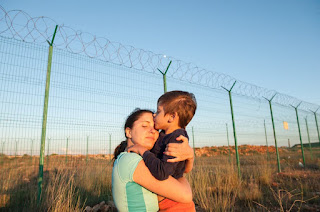
Immigration advocates filed six administrative complaints on Monday against the U.S. government, seeking monetary compensation for harms to these separated families. The complaints, filed under the Federal Tort Claims Act (FTCA), involve six mothers who were forcibly separated from their children—ranging in ages from five to 12 years old.

The facts asserted in these complaints echo the experiences of countless others. The mothers witnessed immigration officers forcibly taking their children from them without explanation. The separations occurred despite tears and pleas by the mothers and their children. One mother reports having her child taken on May 10, only to “mockingly” be wished “Happy Mother’s Day” by an immigration officer.

The mothers were given no information regarding where their children would be taken, how to reach them, or what would happen to them. They signed papers they did not understand. Ultimately allowed to speak with their children by phone, the mothers had to figure out how to pay for the calls, and in some cases, struggled to find someone to arrange for the calls. When they were able to reach their children, the phone calls lasted mere minutes.

Monday, February 11, 2019

The Cato Survey

LEGiTiGO


Immigrants Have More Faith in American Institutions Than the Native-Born

Despite the fact that immigrants living in and arriving in the United States today are not exactly receiving a warm welcome by key government institutions, a recent poll by the Cato Institute shows that immigrants’ faith in America’s key political institutions is strong. In fact, stronger than that of the native-born.

General attitudes among the U.S. public towards U.S. institutions have been in decline for many years. According to Gallup, strong faith in Congress has dropped to 11 percent in 2018, down from 30 percent in 2004. Americans who have “little faith” in the presidency has risen to 40 percent in 2018 from to 20 percent in 2004.

The Cato survey shows that a significantly higher percentage of immigrants express a great deal of confidence in both of these American institutions. Congress does better among immigrants with a 16 percent approval rating, compared to 7 percent among the native-born. The office of the president also enjoys more faith from immigrants at 22 percent, compared to 13 percent among the foreign-born.

Other findings show that immigrants and the native-born overwhelming agree (70 percent) with the statement “America is better than most other countries.”

Asked if they are proud of America’s “fair and equal treatment of all groups in society,” responses are virtually the same between immigrants who are U.S. citizens and native-born Americans. However, a higher proportion of immigrants who aren’t U.S. citizens say they are proud America treats groups equally.

Monday, February 4, 2019

Migrant Detention Centers


ICE Let Sexual Assault Reports Slide At Migrant Detention Centers Run By Contractors: Inspector General

Federal immigration officials are not adequately policing contractors running immigrant detention centers where serious problems are often going unreported, according to a report the inspector general for the Department of Homeland Security released last week.

In some cases, contractors ― including both private businesses and public operations, such as county jails ― failed to notify Immigration and Customs Enforcement of sexual assaults and employee misconduct, the IG report said.
“Instead of holding facilities accountable through financial penalties, ICE issued waivers to facilities with deficient conditions,” the report said.

The report said one facility, for example, was granted a waiver that allowed detainees with serious criminal histories to be held near those with nonviolent offenses. Another facility was granted a waiver to use tear gas instead of pepper spray, which is less toxic, according to the IG report. 

ICE issued only two fines to contractors between October 2015 and June 2018, despite finding more than 14,000 deficiencies in that time period, the IG reported. One facility was fined for repeated deficiencies in health care; another for failing to pay proper wages.

The fines amounted to $3.9 million — or 0.13 percent of the more than $3 billion ICE paid to contractors during that period, the report noted.

ICE approved 65 waivers allowing facilities to ignore contract requirements — most for indefinite time periods ― between September 2016 and July 2018.

The investigation examined 106 detention facilities run by contractors that hold about 25,000 detainees daily. ICE has about 45,670 immigrants in detention each day.

ICE said in a letter accompanying the report that it has a “strong record of holding detention facilities accountable when deficiencies are identified.” It agreed, however, to improve oversight.

Monday, January 28, 2019

Wall Hurts Businesses

LEGiTiGO


Promise to ‘Build the Wall’ Hurts Businesses and Residents Along the Border

As the partial government shutdown stretches on, many individuals, families, and businesses around the country are struggling. At the heart of the shutdown and budget standoff is President Trump’s promise to “build the wall.” Yet for many people and businesses along the border, this is the last thing they want. 

Ahead of President Trump’s visit to the U.S.-Mexico border last week, business owners and leaders spoke out against the president’s continued demand to build additional fencing along the border.
Business leaders in San Diego say that President Trump hyper-focusing on the wall is bad for the local economy and also an ineffective way to use taxpayer money, in part because the wall itself and the construction process can make it harder for people to cross the border at legal ports. With an estimated 90,000 northbound daily crossings at the San Ysidro port of entry, it is vital that business employees, customers, and goods or services can cross the border smoothly and efficiently.
Businesses and communities throughout the border region have long voiced concern about the border wall and militarization stifling cross-border commerce, literally creating barriers that cut into vital revenue and relationships. 

According to Karim Bouris, executive director of Business for Good San Diego, San Ysidro businesses lost upwards of $5 million in November when the government closed the busy border crossing for several hours to install additional security barriers. In Santa Cruz County, California, businesses near the Tumacácori National Historical Park suffered when there were fewer visitors and tourists coming to the park from the Mexican side.

Monday, January 21, 2019

Tent City

LEGiTiGO


As One ‘Tent City’ for Immigrant Children Closes in Texas, Another Opens in Florida

Earlier this month, the Governments administration officially closed the doors of a “tent city” holding over 2,800 immigrant children in Tornillo, Texas. The closure comes after months of public pressure and local organizing. However, any celebration is short-lived. Just days after Tornillo’s closure, the administration announced its plan to increase bed space in another juvenile tent city in Homestead, Florida.

The tent city of Tornillo, about 35 miles from El Paso, Texas opened in November 2016. It later became a major point of controversy when it started being used to house an influx of unaccompanied minors and children who had been separated from their parents in the summer of 2018.

Since it opened, the Tornillo tent city experienced major pushback from the local community due to its military barracks-style conditions, as well as its limited access to medical and mental health care and educational opportunities for the children detained there.

Because Tornillo—and now Homestead—are classified as “emergency” or “influx” shelters, they skirt state child welfare guidelines. Although these sites are deemed “temporary,” the trauma and pain that the children suffer within these facilities is permanent. In “emergency” detention facilities, there are lower standards for staff vetting, training, youth education, and health, as they follow only a loose set of Health and Human Services guidelines.

Monday, January 14, 2019

Damage In Industries

LEGiTiGO

Vital Industries Could Suffer Significant Damage as Workers With TPS Lose Their Status

The Trump administration’s decision to end Temporary Protected Status (TPS) for migrants from several nations—including El Salvador, Honduras, and Haiti—has not only threatened over 300,000 long-term residents with deportation and separation from their families, but created potential workforce turmoil in multiple industries nationwide. The impending loss of workers will have ripple effects throughout local economies that are also deprived of their buying power and tax payments.

The largest of the impacted TPS populations consists of Salvadorans—tens of thousands of whom work in the construction, restaurant, and landscaping industries across the country.

The loss of Salvadoran construction workers will hit hardest in California, Texas, Maryland, and Virginia—where Salvadorans with TPS amount to roughly one-quarter of all construction workers in those states. There are roughly 7,200 Salvadorans with TPS working in construction in California, nearly 6,000 in Texas and Maryland respectively, and 5,200 in Virginia.

Given that most TPS beneficiaries have lived in the United States for many years, construction companies will be losing more than just entry-level laborers. They will also be losing highly experienced workers. The net result will likely be a slow down of construction projects confronted by a sudden shortage of needed skills and labor. This is especially problematic for California and Texas, states hit with natural disasters in the last two years.

Monday, January 7, 2019

Uncertainty Remains About H-1B

LEGiTiGO


Uncertainty Remains About H-1B Registration Process

January 2 marked the final day for comments on a proposed rule by U.S. Citizenship and
Immigration Services (USCIS) that would implement a new registration requirement for H-1B visas for well-educated foreign professionals. This proposal would require employers looking to hire H-1B workers to first register electronically with the agency during a specified registration period

Hasty implementation of the proposal in 2019 could disrupt the Fiscal Year (FY) 2020 H-1B petition process and impose significant costs on employers  The proposed rule would also change how H-1B visa petitions are counted, likely restricting the ability of businesses to get the most qualified workers

The most obvious problem with the proposed registration system is that it is not yet functional, yet USCIS is counting on it being in place by April 1—which seems unlikely  Even if the system is up and running in time and performs as expected  it would still wreak havoc on the H-1B petition process

Companies have already devoted resources to petitioning for H-1B workers under the current system.

Having to then switch to a new system at the last minute would be costly, not to mention disruptive to businesses trying to hire the workers they need in a timely fashion. This would be particularly harmful to smaller businesses  which have fewer resources to switch gears in the middle of the petition process  But even big businesses could suffer from a crushing workload in a short span of time if they suddenly have to file multiple petitions under a new system only weeks before the FY 2020 H-1B season begins