Monday, March 25, 2019
An Update on TPS
A Promising New Bill, More Lawsuits, and an Uncertain Future
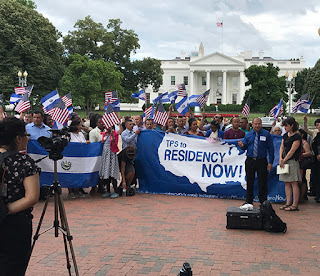
More than 300,000 Temporary Protected Status (TPS) holders whose status was due to expire in the coming months have new reasons to be hopeful. On the legislative front, Congress proposed a new bill to provide permanent status in the United States for many TPS holders and Dreamers. Separately, the Trump administration gave TPS holders from Honduras and Nepal additional time before their status expires while newly filed litigation plays out.
Introduced in the House of Representatives last week, the American Dream and Promise Act of 2019 (H.R. 6) would allow over 2 million TPS holders and Dreamers combined to adjust their status to permanent residents.
TPS holders and Dreamers’ fates have been tied together since both had protections that allowed them to live and work in the United States for years, but neither has had permanent status. The administration has tried to end both groups’ decades-long protections. TPS holders—nationals from foreign countries experiencing conflict or an environmental disaster—would lose humanitarian protections. Dreamers would similarly be at risk for deportation.
That’s why the bill’s 210 co-sponsors included a path for permanent residency for TPS beneficiaries, as well as the similarly-situated Liberians with Deferred Enforced Departure (DED). If the bill passes, both groups would be able to adjust their status alongside Dreamers.
Monday, March 18, 2019
Reuniting Families
Federal Judge Rules Government Must Reunite Thousands More Separated Families
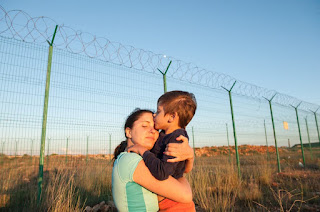
In recent weeks, alarming stories have surfaced indicating that thousands more children were forcibly separated from their parents at the southern border than originally thought.
In response to this and earlier reports that the government had begun separating parents as early as 2017, the American Civil Liberties Union (ACLU) asked a federal judge to expand the scope of its lawsuit challenging family separation. Last week, U.S. District Court Judge Dana Sabraw did just that, adding hundreds of separated families to the class action lawsuit which led to the ostensible end of last summer’s family separation policy.
What does this groundbreaking court ruling mean? It confirms that the government was in fact implementing a policy of family separation far in advance of any formal announcement—despite assurances that a policy never existed. It also means that the government may now be required to reunite all migrant families who were separated between July 1, 2017 and June 25, 2018.
The ACLU’s lawsuit, Ms. L v. ICE, was originally filed to challenge the government’s policy of separating families, alleging violations of the Constitution’s due process clause and federal law protecting the right to seek asylum. The newly expanded class covers any family that was separated by the government after July 1, 2017.
This development comes as we near the one-year anniversary of the Trump administration’s announcement of their “Zero Tolerance” policy.
Monday, March 11, 2019
TPS Detailed
The detailed statistical information on the US Temporary Protected Status (TPS) populations
from El Salvador, Honduras, and Haiti.
TPS can be granted to noncitizens from designated nations who are unable to return to their countries because of armed conflict, environmental disaster, or other extraordinary and temporary conditions. In January 2017, an estimated 325,000 migrants from 13 TPS-designated countries resided in the United States. This statistical portrait of TPS beneficiaries from El Salvador, Honduras, and Haiti reveals hardworking populations with strong family and other ties to the United States. In addition, high percentages have lived in the United States for 20 years or more, arrived as children, and have US citizen children.
The finds:
•The labor force participation rate of the TPS population from the three nations ranges from 81 to 88 percent, which is well above the rate for the total US population (63 percent) and the foreign-born population (66 percent).
•The five leading industries in which TPS beneficiaries from these countries work are: construction (51,700), restaurants and other food services (32,400), landscaping services (15,800), child day care services (10,000), and grocery stores (9,200).
•TPS recipients from these countries live in 206,000 households: 61,100 of these households (roughly 30 percent) have mortgages.
•About 68,000, or 22 percent, of the TPS population from these nations arrived as children under the age of 16.
•TPS beneficiaries from these nations have an estimated 273,000 US citizen children (born in the United States).
•Ten percent of El Salvadoran, nine percent of the Haitian, and six percent of the Honduran TPS beneficiaries are married to a legal resident.
•More than one-half of El Salvadoran and Honduran, and 16 percent of the Haitian TPS beneficiaries have resided in the United States for 20 years or more.
•The six US states with the largest TPS populations from these countries are California (55,000), Texas (45,000), Florida (45,000), New York (26,000), Virginia (24,000), and Maryland (23,000).
•Eighty-seven percent of the TPS population from these countries speaks at least some English, and slightly over one-half speak English well, very well, or only English.
•About 27,000, or 11 percent, of those in the labor force are self-employed, having created jobs for themselves and likely for others as well.
TPS status should be extended until beneficiaries can safely return home and can successfully reintegrate into their home communities. Most long-term TPS recipients should be afforded a path to lawful permanent resident (LPR) status and ultimately to US citizenship.
Monday, March 4, 2019
Undocumented 25 Year Low
Number of Undocumented Immigrants in US at a 25-Year Low
Contrary to President Trump’s claim that “large-scale unlawful migration” across the southern border constitutes a “national emergency” that requires building a wall, research suggests that undocumented immigration across the U.S.-Mexico border is actually the lowest it’s ever been in the past 25 years. The Center for Migration Studies (CMS) has issued a report with this conclusion, which reinforces the findings of a similar report released by the Pew Research Center in November 2018.
According to CMS, the total number of undocumented immigrants in the United States has decreased by one million since 2010 and now stands at about 10.7 million. At the same time, apprehensions at the border have dropped dramatically, falling from 1.6 million in 2000 to about 300,000 in 2017—a decline of more than 80 percent. These numbers would not seem to signal an “emergency” at the border.
CMS also reports that from 2010 to 2016, about two thirds of new undocumented immigrants became undocumented by overstaying temporary visas, while only one third entered across the southern border without authorization. A wall is clearly not going to have an impact on visa overstays.
According to the report, the undocumented population is shrinking mostly because there are more undocumented immigrants leaving the country than coming. Undocumented arrivals fell from 1.4 million in 2000 to about 550,000 in 2007 and have continued near that level. But the number of undocumented immigrants who left the country—either of their own volition or because they were deported—kept increasing and grew from 370,000 in 2000 to 770,000 in 2016.
Monday, February 25, 2019
Multiple Lawsuits
Multiple Lawsuits Filed Against Trump’s National Emergency Declaration
Speaking from the Rose Garden on Friday, President Trump invoked the National Emergency Act after Congress refused to provide full funding for additions to the U.S.-Mexico border wall. By declaring a national emergency, the president could potentially bypass Congress and pull from Department of Defense military construction funds to build new wall. As the president predicted in his Friday speech, it took less than 24 hours for the first lawsuit against the national emergency declaration to be filed.
The first lawsuit came just hours later from the organization Public Citizen on behalf of three landowners and an environmental nonprofit. The landowners argue that the Trump administration will use new money obtained through the emergency declaration to build a wall through their property.
The Public Citizen lawsuit argues Trump’s actions did not have any legal basis and violate the basic separation of powers required by the Constitution. They also argue that Trump’s decision violates the Appropriations Clause of the Constitution, which bars the government from spending money that was not appropriated by Congress. Because Congress specifically limited wall construction in the budget deal, the organizations argue that Trump is unlawfully disregarding Congress’ intent by building the wall with other resources.
The biggest challenge yet came, when a coalition of sixteen states—including California, New Mexico, and New York—brought a lawsuit in the Federal District Court in the Northern District of California. The sixteen states also claim that Trump violated the separation of powers and the Appropriations Clause. Like other lawsuits, the states argue that Trump’s decision was entirely political and that there is no actual national emergency.
Monday, February 18, 2019
Mothers in Seperation Crisis
Immigrant Mothers Are Filing Claims for Monetary Compensation in the Wake of Family Separation Crisis
In April 2018, the Trump administration officially rolled out its “zero tolerance” policy—a policy that has since been universally condemned for its cruel and unlawful practice of separating parents and children migrating to the United States. The policy has had widely documented traumatic and enduring effects on parents and their children.
Immigration advocates filed six administrative complaints on Monday against the U.S. government, seeking monetary compensation for harms to these separated families. The complaints, filed under the Federal Tort Claims Act (FTCA), involve six mothers who were forcibly separated from their children—ranging in ages from five to 12 years old.
The facts asserted in these complaints echo the experiences of countless others. The mothers witnessed immigration officers forcibly taking their children from them without explanation. The separations occurred despite tears and pleas by the mothers and their children. One mother reports having her child taken on May 10, only to “mockingly” be wished “Happy Mother’s Day” by an immigration officer.
The mothers were given no information regarding where their children would be taken, how to reach them, or what would happen to them. They signed papers they did not understand. Ultimately allowed to speak with their children by phone, the mothers had to figure out how to pay for the calls, and in some cases, struggled to find someone to arrange for the calls. When they were able to reach their children, the phone calls lasted mere minutes.
Monday, February 11, 2019
The Cato Survey
Immigrants Have More Faith in American Institutions Than the Native-Born
Despite the fact that immigrants living in and arriving in the United States today are not exactly receiving a warm welcome by key government institutions, a recent poll by the Cato Institute shows that immigrants’ faith in America’s key political institutions is strong. In fact, stronger than that of the native-born.
General attitudes among the U.S. public towards U.S. institutions have been in decline for many years. According to Gallup, strong faith in Congress has dropped to 11 percent in 2018, down from 30 percent in 2004. Americans who have “little faith” in the presidency has risen to 40 percent in 2018 from to 20 percent in 2004.
The Cato survey shows that a significantly higher percentage of immigrants express a great deal of confidence in both of these American institutions. Congress does better among immigrants with a 16 percent approval rating, compared to 7 percent among the native-born. The office of the president also enjoys more faith from immigrants at 22 percent, compared to 13 percent among the foreign-born.
Other findings show that immigrants and the native-born overwhelming agree (70 percent) with the statement “America is better than most other countries.”
Asked if they are proud of America’s “fair and equal treatment of all groups in society,” responses are virtually the same between immigrants who are U.S. citizens and native-born Americans. However, a higher proportion of immigrants who aren’t U.S. citizens say they are proud America treats groups equally.
Subscribe to:
Posts (Atom)