Monday, April 16, 2018
Immigrants in the NBA
2018 Playoffs to feature record 62 immigrant players from 33 countries
NEW YORK, April 12, 2018 – The National Basketball Association (NBA) announced today that team rosters (active and inactive) for the 2018 NBA Playoffs will feature a record 62 immigrant players from a record 33 countries.
All 16 teams competing in the playoffs will feature at least one immigrant player. The Utah Jazz and Philadelphia 76ers have an NBA-high seven immigrant players each. The Boston Celtics, Toronto Raptors and San Antonio Spurs each have six. The Spurs’ 2014 NBA Championship team featured a record nine immigrant players during the playoffs.
The most represented countries among the 62 immigrant players on playoff rosters are France and Australia (seven players each), followed by Canada (four players), Spain (four players), Turkey, Croatia, Cameroon and Brazil (three players each). Thirty-six of the record 64 European players who were on opening-night rosters for the 2017-18 season are on playoff rosters.
Four-time NBA Champion Tony Parker (San Antonio Spurs; France) will be making his 17th straight playoff appearance, the longest active streak among all NBA players.
There were 108 immigrant players from a record 42 countries and territories on opening-night rosters for the 2017-18 season. This marked the fourth consecutive season that opening-night rosters featured at least 100 immigrant players and that all 30 teams had at least one immigrant player.
The previous record for immigrant players in the playoffs (60) was set in 2007, and the previous record for countries and territories represented in the playoffs (30) was set in 2014.
The 2018 NBA Playoffs tip off Saturday, April 14 on ABC. In the opening game, the defending NBA Champion Golden State Warriors will host the San Antonio Spurs at 3:00 p.m. ET.
Monday, April 9, 2018
Troops to the Border
Trumps Calls in the Troops to the Border—But No One Knows What For
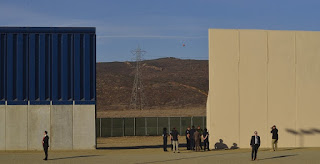
President Trump first announced via tweet—and later a signed proclamation—that he plans to send the National Guard to the nation’s southern border. And yet, at the same time, he acknowledged that border apprehensions (which are used to gauge how many people are attempting to cross the border) are at a 46-year low.
Some have questioned the need for the National Guard at this time given that border apprehensions are so low and the Department of Homeland Security declared just last year that the southern border is more secure and harder to cross than it ever has been before.
There are many other unanswered questions as to what the Trump administration plans to do with National Guard troops on the border. When questioned by members of the media, the Department of Defense and DHS had next to no specifics on how this deployment would happen.
For instance, DHS Secretary Kirsten Nielsen could not say how many National Guardsmen would be sent to the border, their exact location along the border, how long they would remain there, or how much it would cost.
To be clear, this is not the first time that the National Guard has been called to the southern border. President Barack Obama summoned 1,200 National Guard troops in 2010 to aid the Border Patrol with surveillance. Likewise, President George W. Bush called upon 6,000 troops to fill various support roles for Border Patrol agents, thereby freeing more of them to carry out apprehensions.
When President Bush sent the National Guard to the border, there were 70 percent more apprehensions than there are now and 7,000 fewer Border Patrol agents. After President Obama called for the National Guard, the Washington Post reported: “The 1,200 National Guard troops have helped Border Patrol agents apprehend 25,514 illegal immigrants at a cost of $160 million—or $6,271 for each person caught.”
Monday, April 2, 2018
Decennial Census
What Are the Risks of Adding a Citizenship Question to the Decennial Census?
The U.S. Department of Commerce announced Monday night that a question on citizenship status will be added to the 2020 decennial census questionnaire. This decision, which was adopted in response to a request from the Department of Justice, has raised deep concern within both the immigrant rights and academic research communities.
Having an accurate count of U.S. residents, as well as information on their demographic characteristics, is important for a number of reasons. Census information affects the distribution of Congressional seats among states, informs how federal funding is spent on infrastructure and services, and serves as the basis for many decisions that affect the country’s residents. Moreover, the decennial census is mandated by the U.S. Constitution.
According to the memorandum issued by the Secretary of Commerce, the main reason for including a citizenship question is to “permit more effective enforcement of the [Voting Rights] Act.” In particular, the memorandum states the citizenship data will permit a more effective enforcement of Section 2, which “prohibits voting practices or procedures that discriminate on the basis of race, color, or membership in one of the language minority groups.”
However, it is totally unclear how exactly this information would serve the stated purpose and, more importantly, what the real intentions are for its inclusion. Given the openly anti-immigrant agenda advanced by the Trump administration, it is hard not to interpret this as yet another means of intimidating the immigrant community.
Monday, March 26, 2018
Invisible Wall
The Invisible Wall That President Trump Has Already Built
Legal immigration and the number of foreigners visiting the United States has taken a serious hit within the last year, as the Trump administration makes changes to policies and procedures without any Congressional action or approval.
These actions have already had a disturbing, cumulative effect as the administration begins to severely limit flows of immigrants and visitors without even beginning construction on a border wall.
While building an actual, physical wall was the hallmark of the Trump campaign, this primarily depends on congressional action and funding—which the administration has so far failed to secure.
However, it has slowly but quite deliberately started to restrict and attack legal immigration causing significant negative impacts on tourists and students choosing to come to the U.S., as well as employment-based, family-based, and humanitarian-based immigration.
These policy changes are detailed in the new report “Deconstructing the Invisible Wall” by the American Immigration Lawyers Association.
The report breaks down the administration’s changes to policy and procedures into six broad categories, covering issues from the travel bans and extreme vetting to the growing immigrant benefits backlog and new hurdles to naturalization for foreign-born soldiers.
As the report notes, the administration has already placed additional scrutiny in a variety of employment-based immigration areas, including:
“…nonimmigrant petitions for skilled workers, managers, executives, and others; a dramatic increase in Requests for Evidence (RFEs); the dismantling of rules to facilitate immigrant entrepreneurship; new interview requirements; and proposals to eliminate work authorization for spouses of certain H-1B workers, among many other changes.”
Monday, March 19, 2018
Americas Schools on ICE
How Aggressive Immigration Enforcement Hurts America’s Schools
Immigration enforcement has become increasingly severe, especially in the past year. Yet news coverage often merely scratches the surface of what people across the country are experiencing. Consequently, one topic that often gets left out of the larger conversation is the deep and lasting impact immigration enforcement has on the education of children.
Increasingly, education and childcare professionals report that this harsh approach to immigration enforcement is harming the environment in schools and childcare centers and, more broadly, the communities of students and families they serve. Two recent multi-state surveys add to a growing body of evidence demonstrating how immigration enforcement negatively affects children in the United States.
The first, a national survey of pre-K through high school educators conducted by the Civil Rights Project at UCLA, reveals that immigration enforcement has negatively impacted U.S. schools and classrooms. Of the 5,438 teachers, administrators, and other school staff surveyed between October 2017 and January 2018, 73 percent observed potential impacts of immigration enforcement at their school.
“Fear” and “separation” were the two most common words used when describing students’ immigration concerns, based on about 3,500 responses from personnel in 730 schools in 12 states. Thousands of educators described how their students from immigrant families, the vast majority of whom are U.S.-born, “were terrified that families and friends, and occasionally they themselves, would be picked up by ICE… and that it was, at times, very difficult for students to learn and teachers to teach.”
Monday, March 12, 2018
Abolish ICE?
It’s Time to Abolish ICE
A mass-deportation strike force is incompatible with democracy and human rights.
Dan Canon is running for Congress in Indiana’s ninth district this year. A career civil-rights lawyer, Canon filed one of the cases against gay-marriage bans that eventually became the landmark Obergefell v. Hodges, and he proudly wore a Notorious RBG shirt under his suit to the Supreme Court. He is currently representing individuals suing Donald Trump for inciting violence at his rallies.
Canon has also defended clients swept up by Immigration and Customs Enforcement raids, and fought a Kafkaesque deportation system that, at one point, wouldn’t even disclose the location of his client. Now Canon believes ICE should be abolished entirely.
“I don’t think a lot of people have any kind of direct experience with ICE, so they don’t really know what they do or what they’re about. If they did, they’d be appalled,” Canon told me. “ICE as it presently exists is an agency devoted almost solely to cruelly and wantonly breaking up families. The agency talks about, and treats, human beings like they’re animals. They scoop up people in their apartments or their workplaces and take them miles away from their spouses and children.”
The idea of defunding ICE has gained traction among immigrant-rights groups horrified by the speed at which, under President Donald Trump, the agency has ramped up an already brutal deportation process. Mary Small, policy director at Detention Watch Network, said, “Responsible policymakers need to be honest about the fact that the core of the agency is broken.” Her group led the charge to defund ICE with its #DefundHate campaign last year.
Monday, March 5, 2018
USCIS Mission Statement
Removal of ‘Nation of Immigrants’ from USCIS Mission Ignores Agency’s Mandate and American History
Francis Cissna, Director of the United States Citizenship and Immigration Services (USCIS), unveiled a new mission statement for the agency last week, notably deleting the words “a nation of immigrants” as well as other key principles central to the agency’s work.
Given the sweeping changes underway in the enforcement and adjudication of immigration laws, changing a few words here and there in a mission statement—something that is not mandated by law—may seem trivial. But for USCIS, the prior mission statement was a touchstone of the why and the how, informing both employees and the public of the core values driving the work of the agency. Removing references to a nation of immigrants, the promotion of citizenship, and customer service cuts the heart out of the agency.
The previous mission statement, unveiled as part of its first strategic plan in 2005 under the Bush administration by then USCIS Director Eduardo Aguirre, read:
“USCIS secures America’s promise as a nation of immigrants by providing accurate and useful information to our customers, granting immigration and citizenship benefits, promoting an awareness and understanding of citizenship, and ensuring the integrity of our immigration system.”
The new mission statement reads:
“USCIS administers the nation’s lawful immigration system, safeguarding its integrity and promise by efficiently and fairly adjudicating requests for immigration benefits while protecting Americans, securing the homeland, and honoring our values.”
The new version lacks context, as it no longer grounds the agency’s work in the history of our country. There is no vision connecting the past to the present or to the future. There is no mention of the important role USCIS plays in promoting and celebrating citizenship.
There is also a deliberate elimination of the reference to serving “customers,” purportedly to avoid treating immigration adjudications as a mere commodity. Yet USCIS was created in part because of the feeling that applicants were ill-served by the Immigration and Naturalization Service, with abysmal backlogs and a lack of information and transparency. Moreover, it is hard not to think of the petitioners and applicants as customers, since the agency is almost entirely funded by fees paid by these people, who simply want efficient and fair treatment—like most customers everywhere.
Subscribe to:
Posts (Atom)